
Listen As Podcast disclaimer:
The Listen As Podcast is an AI-generated feature that serves as a high-level introduction to the following article written by subject matter experts. The podcast is FOR ENTERTAINMENT PURPOSES ONLY. Please, refer to the original article and other MechaStructure articles for definitive technical details.
The Problem:
The United States is returning to the Moon pursuing an ambitious goal to establish a persistent presence through the catalysis of a sustainable lunar economy. A robust Earth-Moon logistics network is essential for a sustainable lunar economy. While one-way cargo landers offer the most economical delivery option in the immediate future, frequent, repetitive deliveries can cause landers to congregate around major settlement sites. Over time, these remnants occupy ideal natural landing spots, making subsequent landings increasingly more difficult.
Even if each landing is successful, the landing process can cause varying degrees of impact that endanger surrounding facilities and critical infrastructure. For example, landing thrusters on unprepared sites can produce high-velocity jets of regolith, creating a “sandblasting” effect that damages nearby assets. Furthermore, the negative impacts resulting from a potential crash landing are outright unpredictable. Locating landing sites away from high densely occupied areas can mitigate some of the negative impact, but is not a scalable option for long-term operation. Additional distance in between the delivery site and the intended destination is additional operation overhead and uncertainty to be accounted for, risking the last-mile of the delivery mission.
The Solution:
A Lunar Space Port equipped with logistics management systems would provide a reliable and reusable landing site facilitating routine landing and launching operations. On-site off-loading systems eliminate the need for landers to carry onboard off-loaders, and receive more mass budget for valuable cargo. Integrated guidance systems, paved landing pads, and advanced protection measures found in every Lunar Space Port enable high-frequency landing and launching operation in close proximity to core lunar facilities.

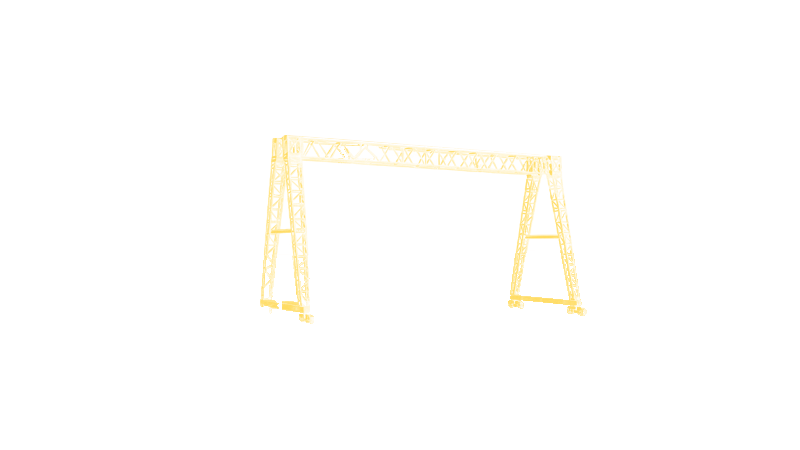
Figure 1: A gantry crane can offload cargo from the lander and then move the lander away from the landing pad.
Economy-wise, having the common infrastructure organizing importing and exporting activities can significantly lower the cost, risk, and complexity of most lunar missions. Making lunar activities economically viable is a fundamental building block of a sustainable lunar economy.
The Offering:
MechaStructure is offering a self-construct robotic gantry that can self-assemble off a mid-size Commercial Lunar Payload Services (CLPS) lander. Upon deployment, the robotic gantry facilitates construction of the landing pad and the regolith-deflecting shields surrounding the paved landing area. Following construction, the robotic gantry will serve as a permanent installation for routine operations such as payload offloading, and other regulation maintenance for the landing facility.
Lunar landing remains a significant technical challenge. Perfect success rates are never guaranteed. Lunar Space Port infrastructure requires robust countermeasures to manage the aftermath of unexpected landing anomalies. The MechaStructure robotic gantry can perform cleanup operations following crash landings, assist functional tipped-over landers, and recover valuable assets.
In general, the heavy lifting and multi-axis manipulation capabilities make the MechaStructure robotic gantry an ideal tool for a wide range of large-scale surface operations. MechaStructure is offering a minimalistic solution to pinpoint some of the most challenging problems that need to be solved to make a persistent sustainable lunar presence possible.