
Listen As Podcast disclaimer:
The Listen As Podcast is an AI-generated feature that serves as a high-level introduction to the following article written by subject matter experts. The podcast is FOR ENTERTAINMENT PURPOSES ONLY. Please, refer to the original article and other MechaStructure articles for definitive technical details.
The Problem:
NASA is set to decommission the International Space Station (ISS) by 2030, marking a shift where the next generation of orbital outposts will be built and operated by the private sector.
While a critical part of the space ecosystem, crewed space stations are difficult to scale. The immense resources required to sustain human life and keep up with astronaut training often conflict with the high-volume demands of modern technological advancement, defense operations, or even large-scale scientific exploration. Due to the complex life-support systems and rigorous risk management to operate, crewed space stations are best reserved for critical tasks where human presence is essential to justify the extreme operational costs.
Conversely, “disposable” satellite constellations have emerged as a popular, low-cost solution for large-scale space operations. However, such a consumable strategy raises significant sustainability concerns. The rapid turnover of short-lived satellites increases the risk of orbital debris and atmospheric pollution, threatening the long-term viability of a sustainable space economy.
The Solution:
Autonomous Operated Space Stations offer a compelling alternative for deploying space assets to facilitate highly anticipated orbital operations. Such platforms eliminate the overhead of human life support, allowing for more streamlined and mission-specific designs.
Similar to the ISS, an autonomous station can host a diverse range of payloads and onboard experiments while supporting regular resupply and return missions. While these platforms lack the immediate on-site problem-solving of a human crew, autonomous stations provide superior scalability for specialized, high-repetition tasks. Autonomous space stations can be constructed in various sizes and configurations to suit specific mission requirements. These designs enable a wide array of applications, including hosting in-orbit data centers, facilitating microgravity pharmaceutical manufacturing, and conducting long-duration scientific research without the biological “noise” of a crewed environment.
Unlike disposable satellites, which must independently carry onboard power generation and propulsion systems, hosted payloads only require mission-specific hardware. Common capabilities, such as power generation, thermal management, attitude control, and high-bandwidth communication, are instead provided by the space station.
Payload hosting allows for deployment, upgrades, and decommissioning in a controlled, manageable manner. The space station infrastructure facilitates a modular “plug-and-play” environment where hardware can be swapped as technology evolves. Furthermore, advanced orbital manufactured products, such as semiconductor wafers or biological crystals, can be safely returned to Earth using existing reentry transportation systems.
The Offering:
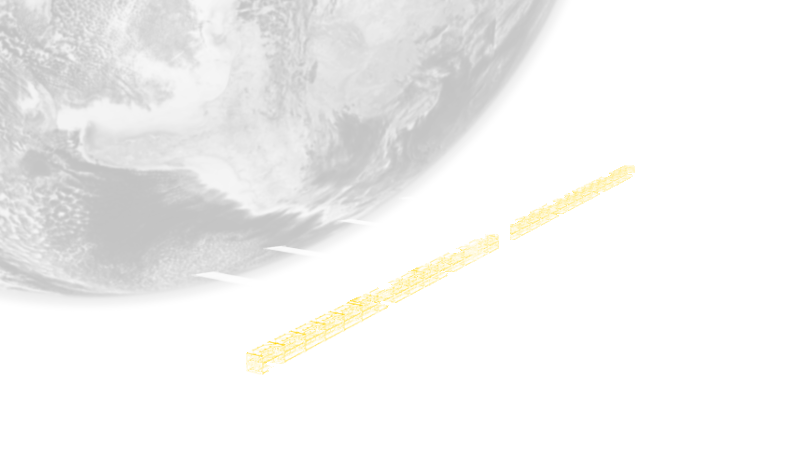
MechaStructure provides a self-assembling framework designed to serve as the backbone for large-scale Autonomous Operated Space Stations. The structural system features integrated utility lines for the seamless transfer of power, data, and fluids, alongside standardized attachment terminals for plugging in hosted payloads or other system modules.
Onboard robotic agents are responsible for the initial construction of the facility and transition to the role of station operators upon completion. These autonomous robotic systems manage all physical onboard manipulation, payload allocations, and routine maintenance tasks. Each station can be expanded and upgraded to maximize facility value with minimal operational overhead, rendering the deployment of such infrastructure economically viable and profitable for sustainable operations.
The maturation of autonomous space stations will pave the way for more complex in-orbit facilities, such as exoplanet observatories or long-distance interplanetary transit systems so large that must be assembled in space.